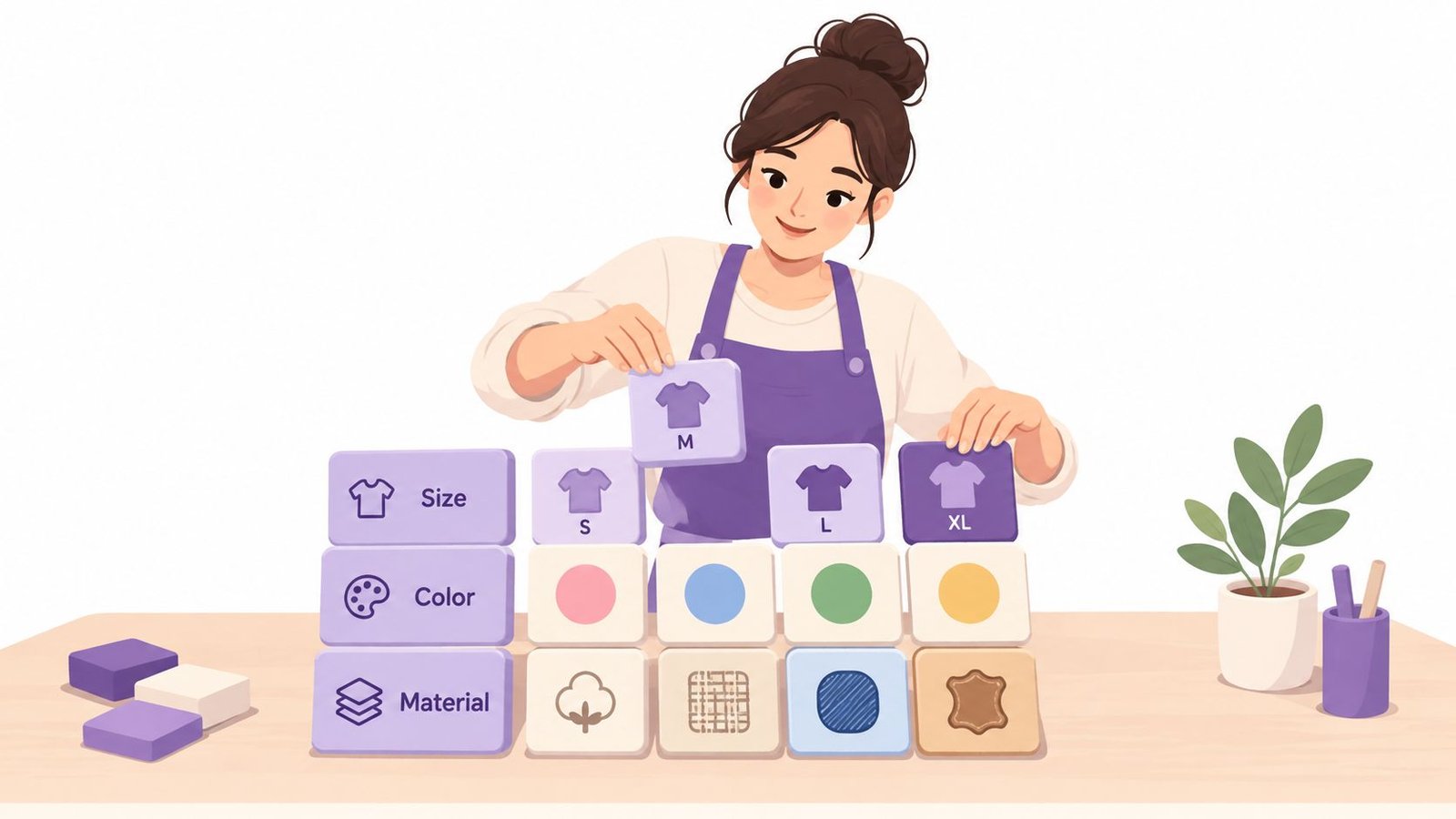
A Shopify product can have several variants but still use one general description for all of them. That works when the options are simple, such as different colors. But once variants have different materials, finishes, features, or specifications, a single description may not tell the full story.
A variant selector shows shoppers what choices are available. The product content should help them understand what those choices actually mean.
Not Every Variant Has the Same Story
Black, blue, and green are straightforward options.
But consider a product where the variants differ by fabric, finish, material, dimensions, or included accessories. Those differences can affect how the product looks, feels, works, or needs to be maintained.
For example:
- A bag may come in different materials.
- A chair may have different upholstery options.
- A jewellery product may use different metals or stones.
- A clothing item may have different fabric compositions.
- An accessory may have different compatibility options.
In these cases, showing only one description for every option can leave useful information hidden.
Keep the Common Information Shared
Not every detail needs to be repeated for every variant.
The main product description can cover information that applies to the entire product, such as:
- General product purpose
- Brand information
- Basic features
- Overall design
- General usage details
- Standard shipping or care information
This keeps the main content clean while giving shoppers a clear overview before they select an option.
Add Details Where the Variant Actually Changes
Variant-specific information becomes useful when an option has something important that the others do not.
A furniture product, for example, could have the same basic design across all options but different upholstery materials. The material, texture, or care information may need to change depending on the selected option.
Likewise, a jewellery product with different metal options may need to show the specific material associated with each choice.
The goal is not to create a completely different product page for every option. It is to show the right information at the right point.
Images Can Support the Difference
Text explains the details, while images help shoppers see them.
If a product comes in different finishes, fabrics, colors, or styles, the selected variant should be supported by visuals that match that option.
For example, selecting a particular fabric should not leave the shopper looking at images that mainly show another material. Matching the content and visuals to the selected option creates a more consistent product presentation.
This is especially useful for products where appearance is an important part of the decision.
Make Product Information Easier to Maintain
Managing variant-specific content manually can become difficult when products have many options.
A small update to one variant should not require rewriting the entire product description. Keeping common information separate from variant-specific details makes ongoing updates more manageable.
This approach also helps merchants avoid adding unnecessary information to every variant just because one option needs it.
Where Variant-Specific Content Makes Sense
This approach can be particularly useful for stores selling:
- Clothing with different materials or styles
- Furniture with different finishes or upholstery
- Jewellery with different metals or stones
- Bags with different materials or designs
- Accessories with different compatibility options
- Products where specifications change between variants
The important factor is not the number of variants. It is whether those variants actually have meaningful differences.
A More Flexible Way to Present Shopify Variants
A good product page does more than list available options.
It connects the selected option with the information and visuals that describe it. Common details can stay shared, while important differences can be presented specifically for each variant.
Task19 Variant Image helps Shopify merchants manage variant-specific and common product descriptions along with variant-specific images, making it easier to present the right content for different product options.
Conclusion
Not every variant needs its own completely separate product page. But not every variant should be treated as identical either.
When product options have meaningful differences, giving those differences their own supporting content can make product information clearer, more accurate, and easier to maintain.
Give each Shopify variant the information it actually needs.
Explore Task19 Variant Image: https://task19.com/shopify-apps/variant-image